Projects
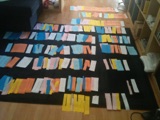
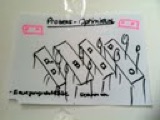
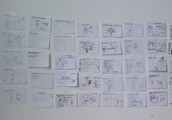
Together with Andrew Schrock, a fifth-year PhD candidate at Annenberg, I am running this year's CRUNCH challenge.
Through CRUNCH we are trying to support students with great ideas that need to expand from campus out into the real world.
The fall semester CRUNCH lunch speaker series was kicked off by Lee Zlotoff, creator of the amazing TV show MacGyver (I hope many of you still remember it). Over the course of the semester, we will have bimonthly lunch speakers that will present the students with useful and interesting insider information on creative problem solving, user experience design, pitching for funding, etc.
In addition to the CRUNCH lunches, we are having monthly (story-) hackathons that are loosely connected to three main research areas of the lab.
Andrew and I are responsible for designing the challenge and mentoring the students. So far it has been a blast...
2014
CRUNCH – The Annenberg Innovation Lab's Student Innovation Design Challenge

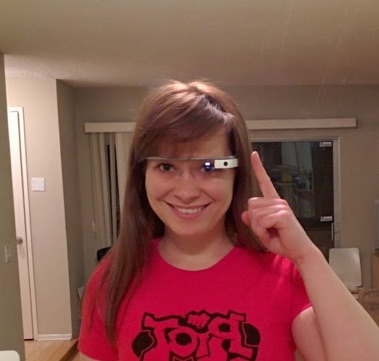
Introducing Google Glass – Exploring the diffusion of this new innovation
With this project, I am interested in two major questions:
-
1)How do people adopt new technologies? How do they use them in their everyday lives?
-
2)How do Glass Explorers perceive privacy issues around Google Glass? How do they deal with them?
I am trying to look at two different sides, media reports (via content analysis) and Glass Explorer forum discussion threads as well as interviews with people who are part of the Explorer Program in order to gain a better understanding of these rather explorative research questions.
The first part of this project was just accepted as a full paper submission to this year's annual ICA conference in Puerto Rico.
LOL! Just Trolling You – Group Mood and Emotion in Relation to Different Group Processes and Outcomes
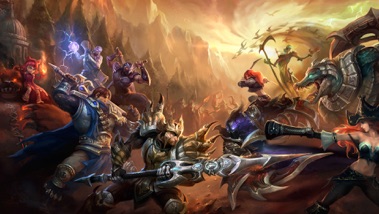
I am very fascinated by how emotions influence cognition and vice versa. Based on the assumption that there is some sort of group emotional state, I am wondering how these flamers, complainers and griefers influence group emotion and, as a consequence, group performance. Do LoL or DOTA2 teams perform worse if they have 3 people flaming them for no obvious reasons? I want to design an experiment that looks at whether there are tipping points for how many flamers need to be in a group to turn the group mood around and whether this negative group mood will impact on their performance as a team.
More to come soon. Hopefully. If IRB allows me to flame undergrads playing LoL...

2013

'girl playing <3' – Video Game Live Streaming and the Perception of Female Online Gamers
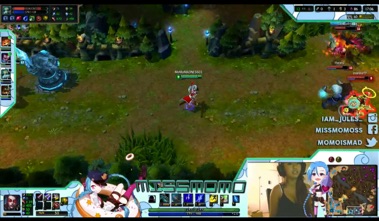
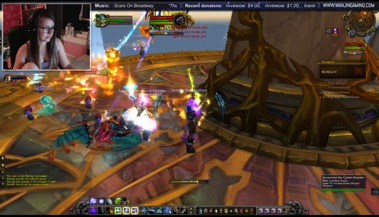
Video game live streaming (primarily on the most succesful platform twitch) has become increasingly popular within the last few years. For some streamers, the possibility of making streaming their main occupation is the dream.
This paper takes a closer look at the codes and rituals that have evolved on this new medium and how they differ for streamers of different genders. In addition, I was interested in how twitch is related to the games being played: Does watching twitch have an influence on the perception of online gamers? I focused on the reception of female streamers and how this might impact on the perception of female online gamers in general.
I took a multi-method approach consisting of a qualitative analysis of twitch streams and a survey of people who are twitch viewers and online gamers.
I got some pretty interesting results which I will be presenting at the 2015 ICA conference in Puerto Rico in late May. Yay.
Emotions – Experiencing ReConstructing the Wall by Tamiko Thiel & Teresa Reuter
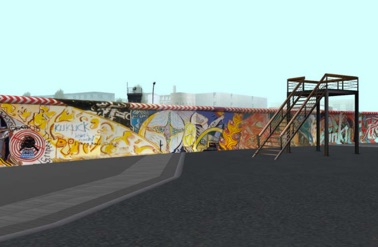
Image by Tamiko Thiel & Theresa Reuter

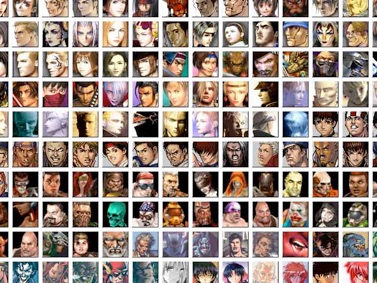
Avatars and CUlture – 'Cross-Cultural Differences in the Perception of Avatars'
(Master's Thesis)
Image by Personal Branding Blog
How do people perceive avatars? How is their perception influenced by their cultural upbringing?
I will research and evaluate different approaches to the perception of avatars and how peoples' assessment of an avatar impacts on their social interaction with the embodied other.
After a thorough literature research, I will conduct an empirical study with members of different cultures. The methodology will mainly remain qualitative this time. I will try to use some story-telling and thinking-aloud methods...
Super excited!

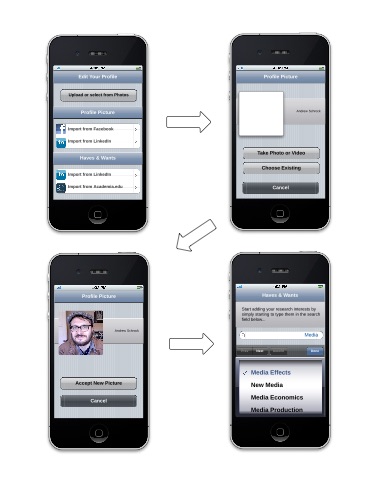
CoLAB – A mobile app and web interface designed to facilitate collaboration around Annenberg and the Annenberg Innovation Lab
Sometimes, when the right people collide, communicate and collaborate at the right moment in time, great things are created...
The Annenberg School for Communication and Journalism is blessed with stellar faculty and bright students. So many smart and motivated people get lost in the confusion of the Annenberg building day by day.
CoLab will make meeting the right people at the right place and the right time around Annenberg and the Annenberg Innovation Lab possible. Stay tuned for updates!
To be continued (hopefully)...

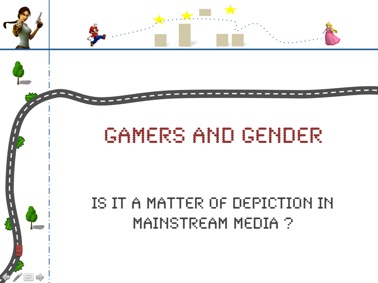
Girls, Guys, and gamers (with Kari Storla)
Together with my fellow PhD student Kari Storla, I designed an online experiment investigating whether the depiction of the average gamer has an influence on self-identification as gamers.
Although the average gamer is around 30 and gamers are almost evenly comprised of men and women, the stereotypic gamer is male, whereas female gamers are often referred to as "girl-gamers".
Does this common depiction of the average gamer has an influence on whether women self-identify as gamers and on their self-reported video game play?

EVE ONline – Learning to Play, Distrust and Protest
Josh Clark, Kari Storla and I will be looking at different aspects of the fascinating yet ridiculously diificult (and sometimes extremely frustrating) MMO EVE-Online.
Together, we are working on a paper on how a huge protest spread through networks of EVE players by looking at server data and forums. Furthermore, we are interested in how these protests might transform the relationships between developers, brand and community.
Another project involving EVE, yet to be determined in more detail, will investigate how trust or distrust are built and fostered.
Most interesting about these projects is that the three of us come from very different backgrounds and hope to combine our knowledge and methodological skills into an interesting new multidisciplinary approach to understanding social interactions as well as consumer-brand-interactions in MMOs.
(BTW: I am that stick figure just starting the approach of that incredibly scary overproportional incline...)
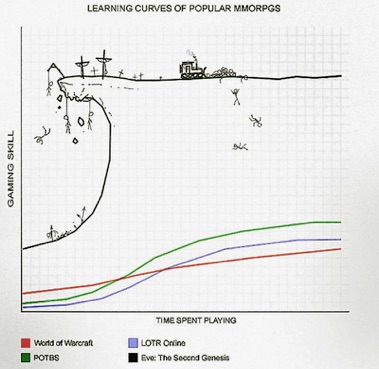
Image from the mmoreporter
2011 - 2012

LEIMERT PHONE CO – Hacking Pay Phones to Engage the Community
"A 5-week experiment at the cutting edge of transmedia, remixed technology, and neighborhood storytelling. Each design team of 3-5 people articulates a new mix of cultural preservation, edge artists and emerging business."
The Leimert Phone Company is an amazing project that finally got me "over the hedge" and away from the USC campus. I had the chance to work with an incredibly diverse and interesting team consisting of Leimert Park residents, activists, business owners, and USC people on one of the three pitches – Dial-a-Track!
Check out our homepage and our Dial-a-Track project wiki!

This project is part of my project course Emotion & Expression. We have the great opportunity to work with Tamiko Thiel, one of the developers of this artistic virtual environment. Together we want to explore which emotions narrative moments of impact actually evoke and whether these reactions correlate with variables such as age, personal experience with the Berlin Wall and so on.
Being able to work with Tamiko is fantastic because we not only have the chance to analyze recipients and media-product but also have the opportunity to interview Tamiko about her intentions.
We will be working with Noldus' FaceReader Software for the first time and are very excited how this new version of the software will perform.
BookPlace was the result of a project course in summer 2011. The assignment was to find new and creative applications for Microsoft's KINECT.
Sandra Richter, Richard Illig and I created the concept for this interactive projected bookshelf. Together with Philipp Schössler we were able to build and exhibit a prototype.
BookPlace not only combines the advantages of digital media with the benefits of conventional bookshelves, in addition it is one part of a greater vision for the future: context-based living.
Imagine the LED-wall in your apartment displaying BookPlace during daytime so that you can do research for your next paper. Later the bookshelf might be replaced by an interface for watching digital movies or a fireplace.
Human-Machine-Persuasion – Ira: The Interpersonal Relationship Agent
Claudia Nichterlein, Marc Schumann, Richard Illig and I created the concept for ira, a persuasive smartphone application, as part of our special interest group Human-Machine-Persuasion.
ira facilitates communication and optimizes our relationships.
But ira is still in development and I don‘t want to blab, so you need to be patient...
Image by Marc Schumann – find more of his work on Epidotes
E-Books and visualization – Bookplace: An Interactive Non-Contact Interface for Reading E-Books

Please watch, rate and comment our BookPlace demo on YouTube
COMMUNICATION WITH THE INFORMED PATIENT – Bachelor's Thesis
After completing my final project for the B.A. track on the brand identity of the Charité Berlin (see below), I decided to stay in the field of health communication for my bachelor's thesis.
For my thesis I researched how interpersonal communication between doctors and their patients is influenced by a change in the patient role – from passive and enduring to informed and resonsible.
It was a really fascinating subject and a good drill for setting up guidelines for qualitative interviews as well as conducting and evaluating them.

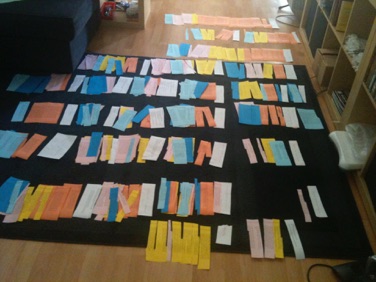
This is how qualitative interviews are categorized nowadays....
BRAND IDENTITY CHARITÉ BERLIN – Final Project for the B.A. Degree

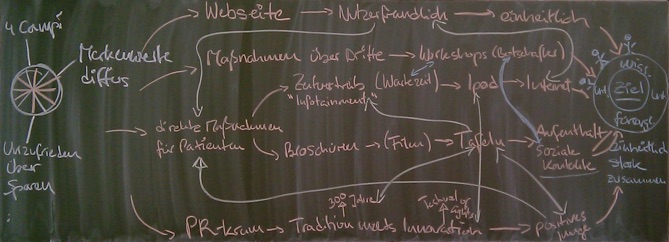
The 'Communication-Project' is the final project of the B.A. program in Communication in Social and Economic Contexts. It is intended to demonstrate the students' ability to design a whole communication concept involving research, strategic planning and verbal as well as audio-visual design of the communication measures.
Our client for the project was the 'Stiftung Charité' and our assingment was to identify effective communication measures for introducing the new brand values to our target group, the patients. The Charité is one of Europe's most renowned hospitals and the second largest employer in Berlin.
Together with my project team I conducted several qualitative interviews, surveyed more than 150 patients, statistically evaluated the data, designed a strategy oriented on Porter's fit of organizational activities and created the concepts for several communication measures, e.g. posters, a new audio-book and iPod rental system for patients and a revised version of the website.
Cover for our project documentation (designed by Soo-Hee Kim)

2010